Film crew silhouetted on a dark soundstage

The Production Banner

Black Ruby Media

The production company founded by Dwayne Ballen, built by a journalist and run on reporting. Black Ruby Media develops scripted, unscripted and documentary programming that starts with a real question and refuses to answer it cheaply.

Stories that start with a real question — and follow it to where we're going.

The Full Slate

All eighteen projects, in one document.

Scripted, unscripted and documentary — loglines, development status, the distribution case for Title Card, and what a full development package contains.

Download the full slate (PDF)

Development Slate

What we're building.

DocumentaryProposed — in development

Charles Scott: First of His Class

A documentary feature on Charles Scott — the first Black scholarship athlete at the University of North Carolina and, more significantly, the first star Black athlete at any major white university in the South — whose dignified presence and success challenged established norms across the entirety of Dixie, from Ole Miss to Kentucky to Georgia to LSU to Florida to Alabama. In one of the most pivotal and turbulent times in American history, he became an agent of change. Dwayne Ballen attached as proposed executive producer.

Documentary seriesProposed — in development

A Thousand Words or More

Three photographs per episode. The photographers, subjects and witnesses take us behind images that shaped how we see the world — revealing the circumstances, choices and human stories the frame cannot show on its own.

Unscripted seriesProposed — in development

No Brown M&Ms

A light-hearted documentary series investigating the surprising requests in entertainment contract riders — and the practical needs, personalities and backstage stories behind them. Each case is reported and verified rather than taken at face value.

DocumentaryProposed — in development

Peel Slowly and See: The Story of Album Covers

A feature documentary on album art as music's visual language: the artists, designers, photographers and fans behind covers that turned a record sleeve into a cultural statement, from intimate portraits to provocation and protest.

DocumentaryProposed — in development

The Rilly Big Shew!

A feature documentary exploring The Ed Sullivan Show as a shared stage for twentieth-century American culture — from variety acts and musical breakthroughs to the show's fraught relationship with race, taste and television gatekeeping.

DocumentaryProposed — in development

Pauli Murray: Social Justice Warrior

A feature documentary about Pauli Murray, the legal thinker, writer and Episcopal priest whose work crossed the fights for racial and gender equality — and whose personal life complicates any simple account of a trailblazer.

DocumentaryProposed — in development

A Game Above All Others

An hour-long documentary on the 1974 ACC Tournament final — NC State 103, Maryland 100 in overtime — and the season of probation, rivalry and one-bid math that made a conference championship feel like a national elimination game. Dwayne Ballen attached as proposed executive producer.

UnscriptedFormat available

Second Whistle

A premium interview series exploring the lives of former athletes in myriad different endeavors and walks of life — from business to entertainment to politics to civic life and all points in between.

ScriptedIn development

Party at Punk's

An hour-long drama/comedy set at Punk's Patio, the Atlantic Beach nightclub where Black performers of the fifties and sixties found respite after playing segregated Grand Strand rooms — told through a young employee of the club.

ScriptedProposed — in development

Harlem Renaissance

A premium serialized period drama set in Harlem between the wars, where a generation of Black writers, musicians and organisers builds the most consequential cultural movement in America — and fights over who owns it.

ScriptedProposed — in development

The Vare Machine

A political period drama about the brothers who built a contracting business, a ward organisation and finally a city — the Vares of South Philadelphia, and the machinery of urban power in the first decades of the 20th century.

ScriptedProposed — in development

Kidnapping Pearl

A contained dark comedy set across one night: a bookseller who has written a novel nobody will read, the friend whose devotion curdles into a crime, and the talk-show host they take — who turns out to be the only person in the room in full command of herself. An original concept by Dwayne Ballen.

ScriptedProposed — in development

The Blackhawk of Wall Street

A premium historical limited series on Jeremiah G. Hamilton (c.1806–1875) — a Black financier who built a fortune inside antebellum New York, survived a death sentence, a bankruptcy and a lynch mob at his door, and was barred from the stock exchange by name for his colour. Dwayne Ballen attached as proposed executive producer.

ScriptedPitch ready

Title Card

A scripted dramedy set inside the crew that puts a live sporting event on air for a major network — the producers, commentators, field reporters and control-room operators whose names never reach the broadcast. The engine is the personal anxiety and neediness the polished broadcast cannot show, carried by a fictional on-air announce team and by an incredibly controlling producer whose need to run the broadcast is what keeps breaking it: a play-by-play voice who cannot stop performing, a colour analyst whose expertise is his only argument for staying, a field reporter whose access is her ambition, and a widening circle of characters around them. A core ensemble carries the series, and the format opens a lane for real sports and entertainment figures to appear as themselves each episode. Tonal reference: HBO's The Larry Sanders Show. The title is the card the audience sees at the top of every game — the moment the announcer welcomes them in.

DocumentaryProposed — in development

The Autism Project

A hosted documentary special on autism in America — the research and its limits, the services families actually use, the college programmes, the lives of autistic adults told by autistic adults, and a father's own account delivered in a small room. Dwayne Ballen proposed as host and executive producer.

DocumentaryProposed — in development

Field of Activism

A feature documentary on twenty years of athlete activism — from a speed skater giving away his Olympic bonus in Torino in 2006 to the kneels, walkouts, lawsuits and campus fights that followed, and the organised backlash that met each of them. Dwayne Ballen attached as proposed executive producer.

DocumentaryProposed — in development

The Souls of Beach Music

A feature documentary on the two souls of Beach Music: the Black jump blues, R&B and soul that built it, and the white Carolina dance floors that adored it under Jim Crow — including the segregated touring circuit and the refuge of Atlantic Beach. Dwayne Ballen attached as proposed executive producer.

DocumentaryProposed — in development

aMAZEing

A feature documentary about the most devoted audience in American popular music: Maze featuring Frankie Beverly, a band with no new album since 1993 that filled arenas for another thirty years — and the crowds who sang the songs back. Dwayne Ballen attached as proposed executive producer.

All titles are working titles and all projects are proposed concepts in development. No talent, rights, archive access, financing, distribution or partnership is attached or secured. Participation by any person, school, conference or network named in a logline is proposed only. Kidnapping Pearl is a work of fiction; its characters are invented and are not based on any real person. Historical projects distinguish documented fact from dramatized material in their development materials. Full packages — including the period-drama bibles for Harlem Renaissance, The Vare Machine and The Blackhawk of Wall Street, the expanded treatments for A Game Above All Others and Kidnapping Pearl, the documentary feature package for Charles Scott: First of His Class, and the documentary packages for The Autism Project, Field of Activism, The Souls of Beach Music and aMAZEing — are private materials available to qualified buyers and partners under NDA.

The five newly listed concepts are drawn from Dwayne Ballen's written proposals. Specific rider anecdotes and historical claims require independent verification; photographs, album artwork, music and television footage require rights and archive review. No streaming outlet is attached or in negotiation.
For Buyers & Production Partners

Six concepts, including Title Card, in one overview.

A six-page overview of A Thousand Words or More, No Brown M&Ms, Peel Slowly and See: The Story of Album Covers, The Rilly Big Shew! and Pauli Murray: Social Justice Warrior — with loglines, descriptions and development status. Full development packages for every slate title are available to qualified buyers and partners under NDA.

Download the concepts overview (PDF)

Concept Matcher

Find the right project for your slate.

Tell us what you're developing for. We'll suggest the slate concepts that fit best.

Recommendations

Your matches will appear here.

    Suggestions are generated automatically. All projects are proposed concepts in development.

    Request a Full Treatment

    Ask for the package.

    Documentary Sequence

    The order of attack.

    Four documentary projects, ranked by what can move first rather than by what is most exciting. The order is set by rights risk and by access: originated material before archive, archive before recorded music. Perishable testimony is captured out of sequence, early, wherever people are elderly or recently bereaved.

    Year One01

    The Autism Project

    Hosted, originated, lowest rights risk. Dwayne hosts and the material comes from twenty years of his own reporting and speaking. No music masters, no league archive, no estate gate — it can be sampled cheaply and pitched first.

    Gate — Verified prevalence data, a paid autistic consultant, a legally reviewed consent package, and a 12–15 minute sample segment.

    Year Two02

    Field of Activism

    Interview-led and archive-heavy. The access work — athletes, leagues, on-the-record opposition — takes a year on its own, and the archive-cost answer decides whether it is a feature or a three-part series.

    Gate — Sourced twenty-year chronology, an archive-cost estimate, fair-use counsel, and two banked interviews including one opposition voice.

    Year Three03

    The Souls of Beach Music · aMAZEing

    Both are gated by recorded-music rights, and aMAZEing additionally by the estate position. They come third because the licensing plan has to precede the pitch — but the elder and fan testimony for both is perishable and gets captured in Year One, self-funded, ahead of financing.

    Gate — Music-rights surveys with licensing bands, an estate and surviving-member position in writing, and community consultation on the Carolina coast.

    Sequencing is an internal development plan, not a production schedule or a commitment. No financing, distribution, participation or clearance is secured for any of these titles.

    Featured Project

    Charles Scott: First of His Class.

    In 1966, Charles Scott became the first Black scholarship athlete at the University of North Carolina — and, more significantly, the first star Black athlete at any major white university in the South. College football and basketball held a high cultural position across the entirety of Dixie, the Deep South. Scott's dignified presence and success challenged established norms from Ole Miss to Kentucky to Georgia to LSU to Florida to Alabama and across the region. During one of the most pivotal and turbulent times in American history, he became an agent of change.

    Charles Scott: First of His Class is a documentary feature tracing his three seasons in Chapel Hill (1966–1969): the recruiting fight, the quiet hostility, the team that rallied around him, and the seasons that made him an All-American and forced a community — and a region — to see itself.

    Built on documented history and carried by Dwayne Ballen's reporting instincts, the film distinguishes what the record shows from what memory embellishes — and asks what Scott's years reveal about the people, the institution, the game, and a country at the turning point of its second Reconstruction.

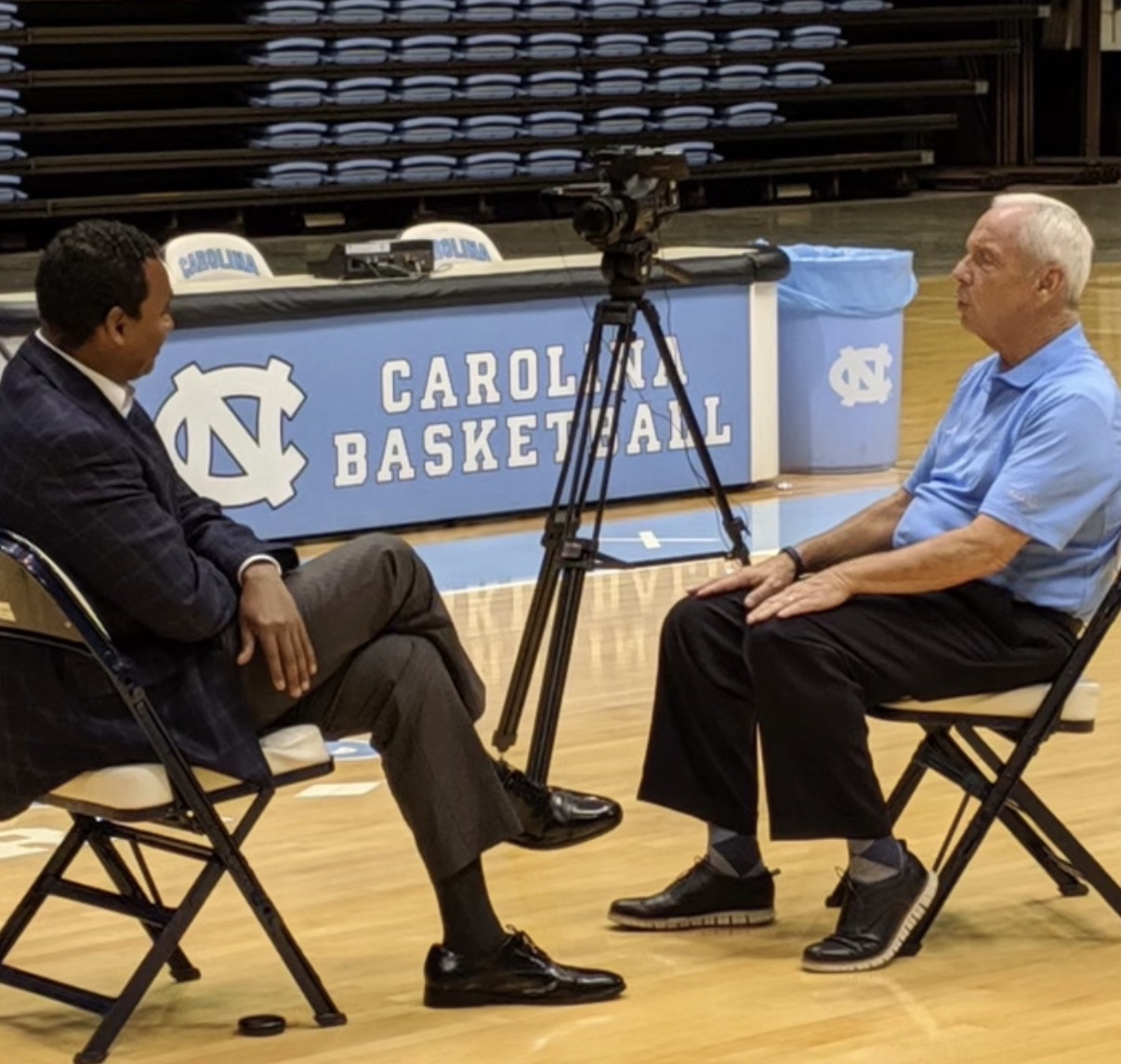
    Dwayne Ballen conducting an on-camera interview on the floor at Carolina Basketball, with a cinema camera on a tripod between the two chairs
    On location — an on-camera interview on the floor at Carolina Basketball.

    Project card

    Format
    Documentary feature
    Subject
    Charles Scott — UNC basketball, 1966–1969
    Executive producer
    Dwayne Ballen
    Status
    In development — pitch and treatment available
    Historical method
    Documented fact distinguished from dramatized material

    Source Notes

    The history behind the story.

    The claims that frame Charles Scott: First of His Class rest on documented institutional and athletic records. The following notes identify the historical basis for each framing claim, distinguish what the record establishes from what the film explores, and flag where memory and dramatization begin.

    First Black scholarship athlete at UNC

    [F] University of North Carolina records show Charles Scott enrolled on athletic scholarship in 1966 and joined the varsity basketball team, making him the first Black scholarship athlete at the university. This is established institutional fact, not a claim requiring interpretation.

    First star Black athlete at a major white university in the South

    [A] This is an analytical claim, not a single record. It rests on the documented chronology of desegregation at major Southern programs: most Atlantic Coast Conference and Southeastern Conference schools had not yet integrated their basketball rosters when Scott arrived in 1966. The word “star” is supported by his documented on-court performance — he became an All-American and led UNC to two Final Fours — but the superlative framing (“first star”) is the film's interpretive position, not a designation awarded by any single body.

    Cultural position of college football and basketball across Dixie

    [A] The high cultural standing of college football and basketball across the South in the 1960s is documented across sports historiography, university archives, and press accounts of the era. The claim that this made Scott's arrival a regional flashpoint — not merely a campus event — follows from that documented cultural position and from the documented patterns of resistance to integrated rosters at peer institutions across the same years.

    The regional scope — Ole Miss, Kentucky, Georgia, LSU, Florida, Alabama

    [C] The institutions named are listed as illustrative of the regional context, not as specific antagonists of Scott or UNC. Each has its own documented desegregation timeline, and the film's private treatment identifies which programs integrated before, during, and after Scott's three seasons. The list is included here to convey the breadth of the cultural landscape, not to assign a sequence of events.

    Three seasons, 1966–1969 — All-American, Final Fours

    [F] Scott's varsity seasons, his All-American recognition, and UNC's NCAA Tournament appearances during his career are matters of published athletic record. The recruiting fight, the quiet hostility, and the team dynamics described in the film's framing are drawn from reported accounts and interviews documented in the private treatment, where each is sourced and labeled as [D] dramatized where memory is reconstructed rather than recorded.

    “The turning point of its second Reconstruction”

    [A] The phrase “second Reconstruction” is an established scholarly framing for the civil-rights era of the 1950s–60s, used by historians to draw a parallel between post-Civil War federal intervention and the civil-rights legislation and judicial decisions of the 1950s–60s. Its application to Scott's years is the film's interpretive choice, grounded in that scholarship but not asserted as fact.

    “Agent of change”

    [A] This is a characterization, not a verified designation. It follows from the documented sequence — his presence, his success, and the institutional and regional response — but the phrase itself is the film's editorial position. The private treatment distinguishes the documented effects of Scott's enrollment from the broader cultural claim.

    Labeling key

    • [F] — Established fact: verifiable in published institutional or athletic records.
    • [A] — Analytical claim: grounded in documented evidence but reflects the film's interpretive position.
    • [C] — Contextual: provided for regional and cultural background; not asserted as a specific documented event.
    • [D] — Dramatized: drawn from reported accounts or reconstructed memory; labeled as such in the private treatment.

    These source notes document the public-facing claims on this page. The private treatment, available to qualified buyers and partners under NDA, carries the full evidence map — sourced interviews, archival citations, and claim-by-claim verification for every dramatized scene and reconstructed exchange.

    Featured Project

    Party at Punk's.

    James Brown. The Temptations. Etta James. The Platters. Sam Cooke. They packed rooms along South Carolina's Grand Strand in the fifties and sixties — and then, under Jim Crow, had to go somewhere else to sleep.

    That somewhere was Atlantic Beach: four incorporated blocks in North Myrtle Beach, with Punk's Patio, an oceanfront nightclub, at its centre. When the gigs finished, the performers came here — and the jam sessions that followed became legend.

    Written and executive produced by Dwayne Ballen — a native of the region and the great nephew of Atlantic Beach's founder — Party at Punk's is an hour-long drama/comedy told from the perspective of a young employee of the club. It holds the sobering realities of the era and the joy of the room in the same frame, carried by the music.

    Two guitarists playing at golden hour on a golf course terrace while a boom microphone hangs over the session and Dwayne Ballen listens
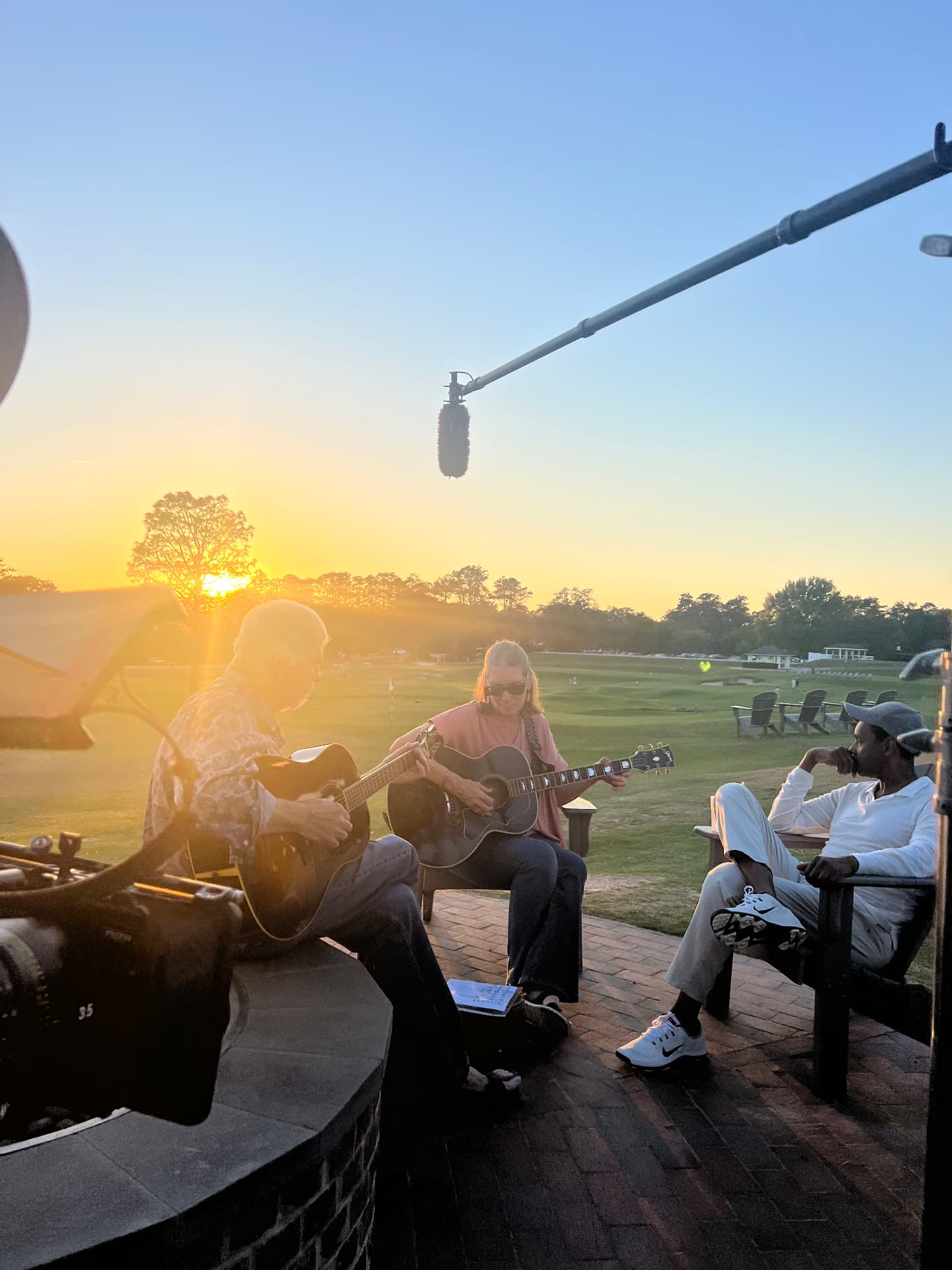
    Golden hour on location — a music session filmed for an original production.

    Project card

    Format
    Hour-long drama/comedy — feature or series
    Setting
    Atlantic Beach, South Carolina — 1950s–60s
    Point of view
    A young employee of Punk's Patio
    Executive producer
    Dwayne Ballen
    Status
    In development — treatment available

    Capabilities

    End to end, or wherever you need us.

    01

    Development

    Concept, research, treatment, sizzle and pitch materials.

    02

    Production

    Field and studio production, crewing, and cinematic interview capture.

    03

    Post

    Story edit, color, mix, graphics package and clip strategy.

    04

    Partnership

    Co-production, work-for-hire, brand-funded and licensed models.

    Buyers, brands and co-producers.

    Request the full slate deck, or bring us a project that needs a credible on-camera lead and a production team that can carry it.

    Check availability